
Research and Publications
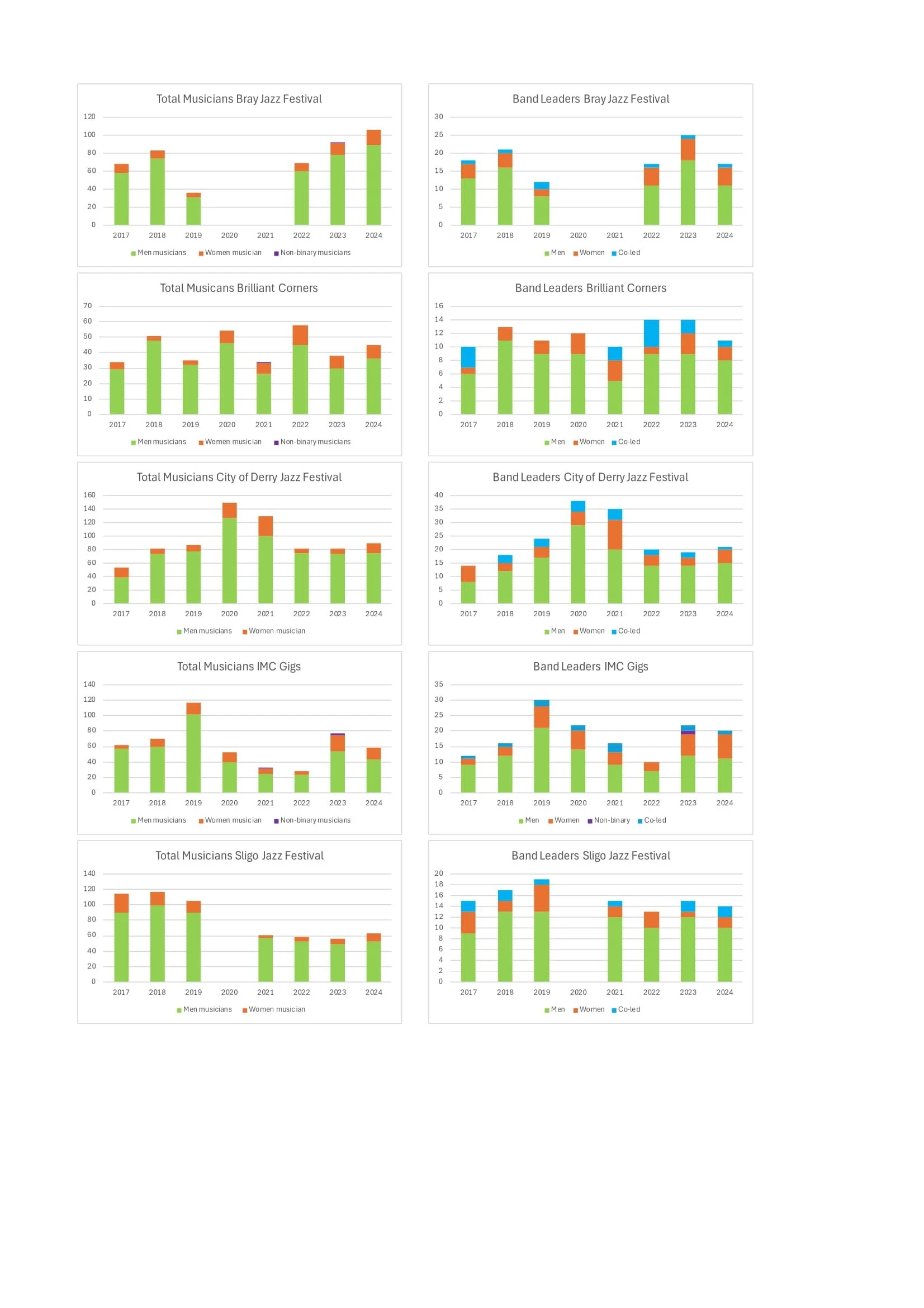
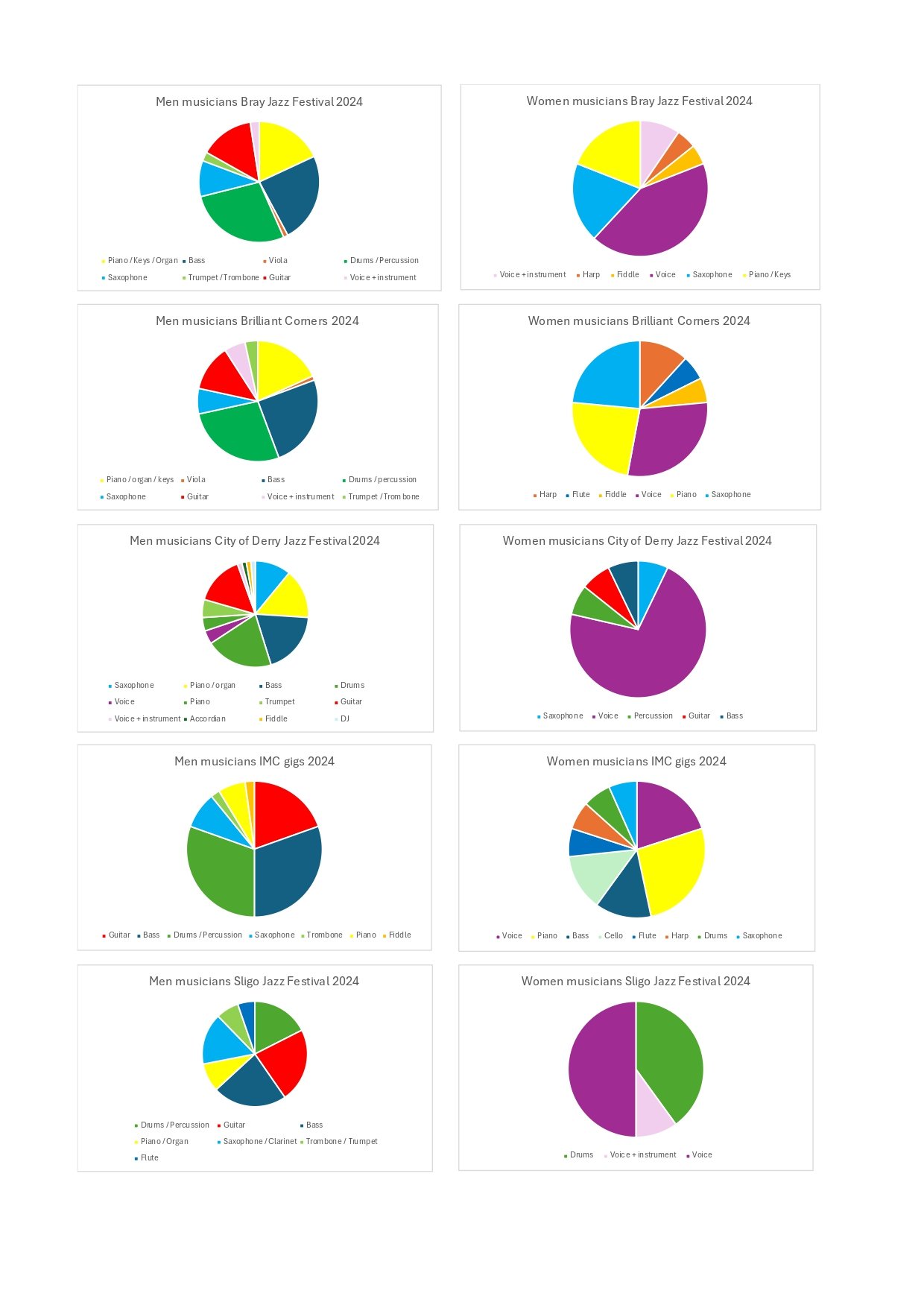
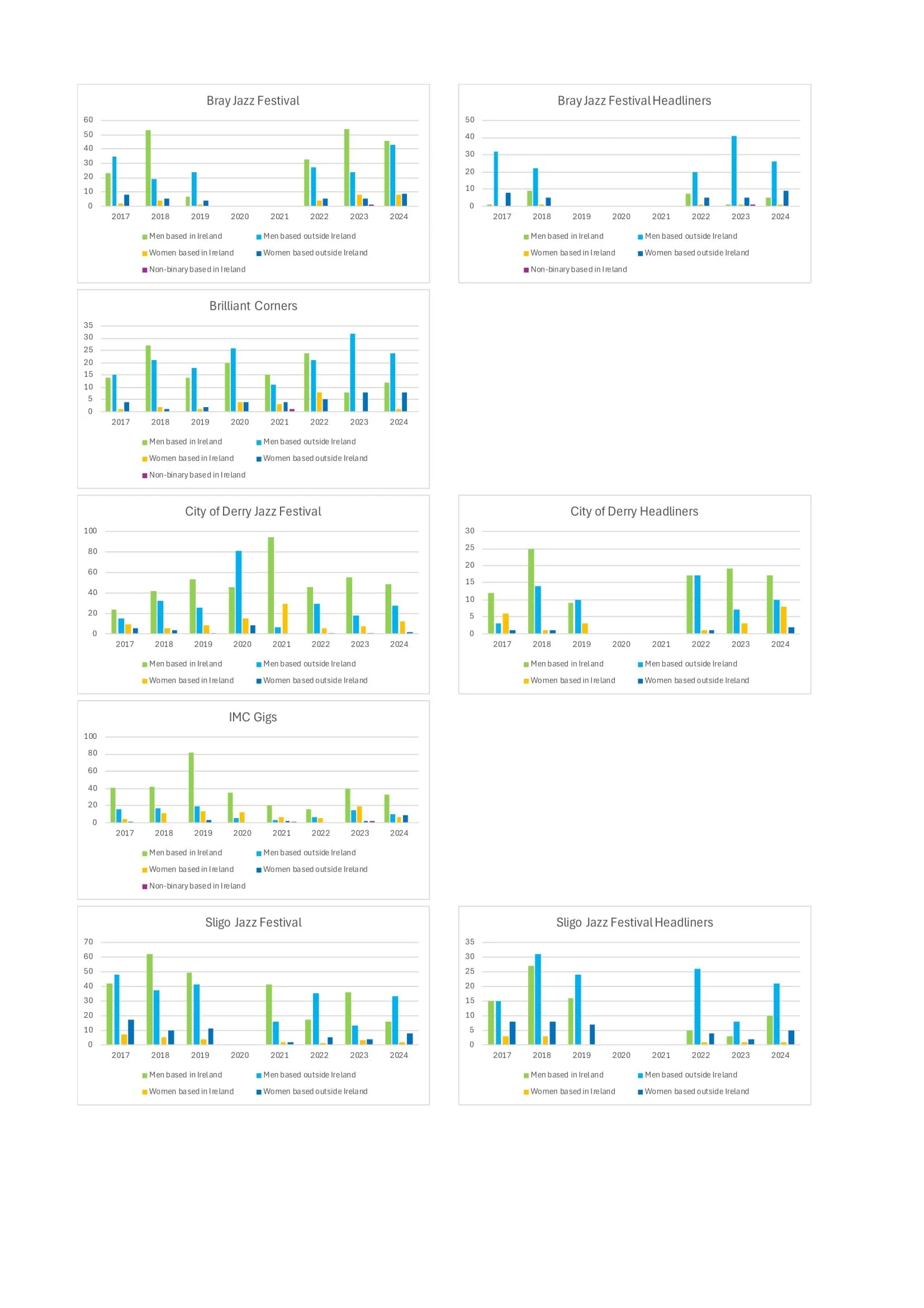
Journal Article – ‘There are no other women making this kind of music’: The intersections of gender, musical role, and musician location through jazz promotion in Ireland.
By Dr Sarah Raine
In this article, I highlight how promoters are both reinforcing and attempting to intervene into gendered barriers to accessing a successful jazz career on the island of Ireland. This discussion is based on initial data from an ongoing four-year Research Ireland funded project, Improvising Across Boundaries (2023-2027), and provides clear evidence of a gender imbalance at four major festivals and the largest promoter of improvised music in Ireland over eight years. The data analysis tracks musical role, band leadership, and the scheduling of Ireland-based and international performers in relation to gender, adding to the growing body of scholarly evidence of the underrepresentation of non-men instrumentalists in jazz. I draw on interviews with promoters and musicians, ethnographic engagements, and an island-wide improvising musician survey to highlight ongoing good promoter practice and the limitations of promoter action. Whilst external factors create complex issues for promoters to overcome, general patterns of promoter reliance on women vocalists and international instrumentalists work to reiterate gendered musical roles that are dominant in jazz and to devalue women and non-binary musicians based in Ireland.
To cite this: Raine, Sarah (2026) ‘“There are no other women making this kind of music’: The intersections of gender, musical role, and musician location through jazz promotion in Ireland’, Jazz Research Journal 18(1-2), pp. 69-98.
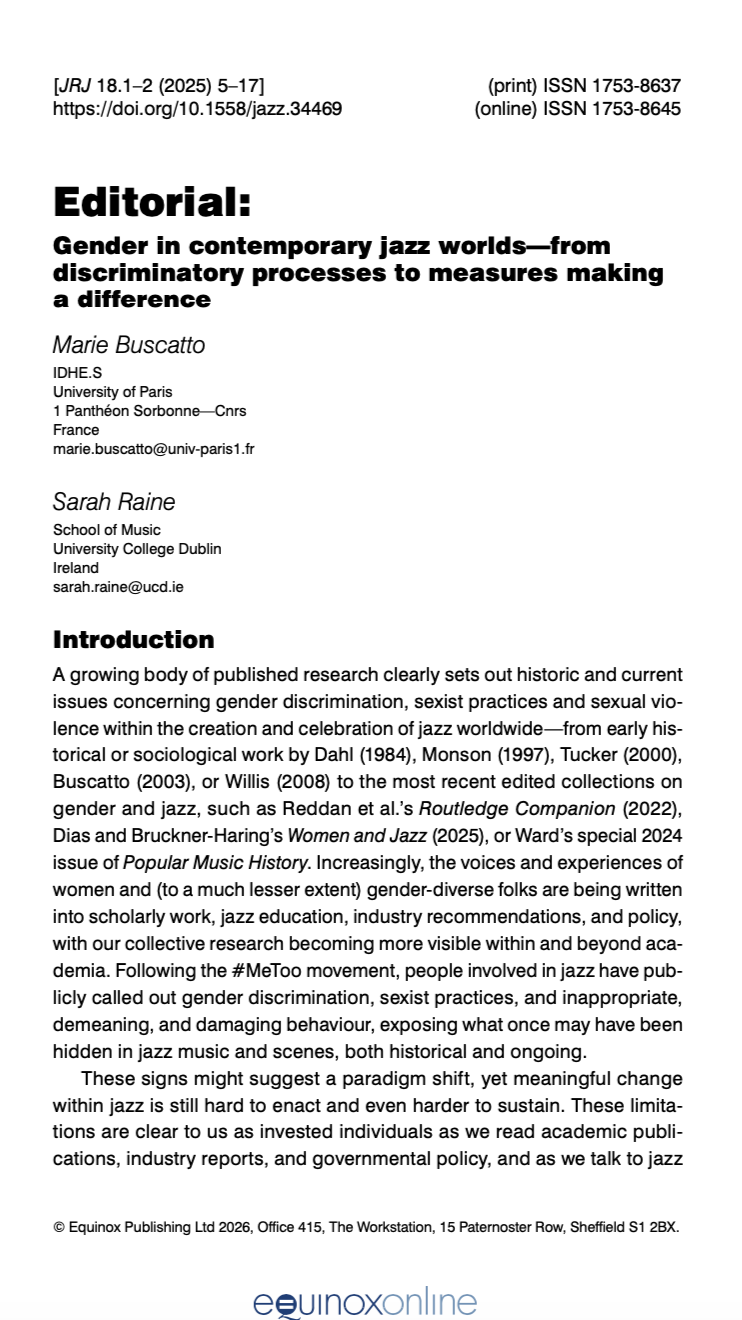
Editorial – Gender in contemporary jazz worlds – from discriminatory processes to measures making a difference.
By Professor Marie Buscatto and Dr Sarah Raine
Editorial for a special issue of Jazz Research Journal titled, Does it work?: ‘Fighting’ gender-based sexism, discrimination, and violence in jazz and improvised music
This special issue includes the following articles:
‘Street justice’, ‘mental strength’, and double standards: Gendered relations in a European jazz educational project – by Guro Gravem Johansen, Karlstads Universitet (Sweden)
A bumpy road towards equality. Feminising jazz worlds through positive discrimination – by Marie Buscatto, IDHE.S, University of Paris 1 Panthéon Sorbonne and Ionela Roharik, CESPRA, Cnrs – Ehess (France)
‘There are no other women making this kind of music’: The intersections of gender, musical role, and musician location in jazz promotion in Ireland – by Sarah Raine, School of Music, University College Dublin (Ireland)
Rethinking inclusion work in Norwegian jazz education through student-led participatory action – by Liv Quist Christensen and Jennifer Branlat, Norwegian University of Science and Technology (Norway)
From Silence to Resonance: A Situated Perspective on Sexual Harassment in Jazz Education – by Beatriz Nunes, Universidade Nova de Lisboa (Portugal)
Reconfiguring Access and Creativity in Improvised Music: Practice-Based Perspectives from Five Women and Non-Binary Musicians – by Una MacGlone, Royal Conservatoire of Scotland (UK) and Raymond MacDonald, University of Edinburgh (UK)
But Can She Play?: A Preliminary Investigation into the Influence of Visual Stereotypes on Audience Perceptions of Jazz Performance – Monika Herzig, Jam Music Lab Private University, Vienna (Austria) and Robert Goldstone, Department of Psychological and Brain Sciences, and Program in Cognitive Science, Indiana University (USA)
Improvising Intersecting Identities in Jazz: An Autoethnographic Account of an Asian Woman Jazz Violinist – Pei Ann Yeoh, Universiti Teknologi MARA (Malaysia)
To cite this editorial: Buscatto, Marie and Sarah Raine (2026) ‘Editorial: Gender in contemporary jazz worlds – from discriminatory processes to measures making a difference‘, Jazz Research Journal 18(1-2), pp. 5-17.


